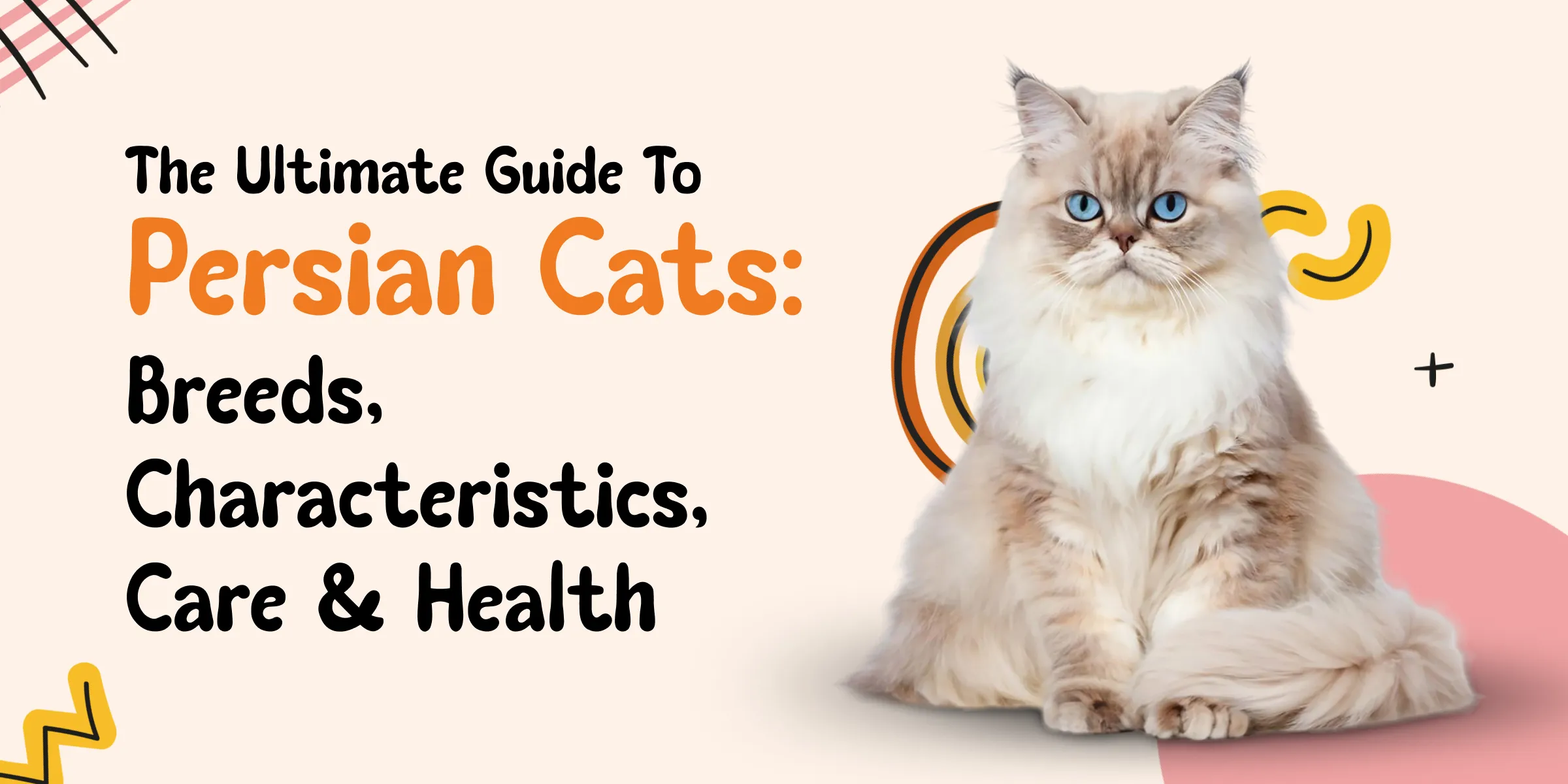
The most attractive thing about Persian cats are that they are that they have captivating aura that attract people towards them. They are famous for their calm and regal personality as well as long hairs and expressive eyes but despite their beautiful and attractive charm there are certain things that needs to be understood in terms of their personality, health, care and wellness as every pet has different techniques and health care tips to take care of them , Persian cats also have their own requirements and must need to be fulfilled by potential owners.
This comprehensive guide will help you provide every possible information from Persian cats origin to their health care , from nature to nurture and from physical needs to their temperament. This guide will uncover all the secrets and hacks from their long shiny coat to sparkling eyes. Persian cats are really dedicated but in return they want proper care and a dedicated owner to meet their grooming needs.
This guide will help you to make the decision to adopt these little companions and to specify
whether Persian cats are right for you to adopt and whether they fit your environment and
lifestyle and understand their unique charm and individuality. This guide will fully aware you of
potential risks and benefits of Persian cats and Will tell you why they are perfect as a pet.
Brief History And Origin
Ancient Roots
- Origins in Persia (Iran):
Persian cats are believed to have originated in Persia (Iran) around the 1600s.Their history lined
them with cities like Khorasan and other famous regions of Persian as Long-haired cats were not
common other continents of the world, so when hey were traded to Europe people really admire
them and they are considered as exotic at that time because of their silky, flowing coats and shiny
eyes they were really an attraction for European people. - Introduction to Europe:
The 1620s is often considered as the beginning of Persian cats era in Europe while Italian traveler Pietro Della Valle is credited for bringing the first sparkling eyes and long coated Persian cats from Persia to Italy.
Evolution of the Breed
- Ancient Origins (1600s–1700s):
The longhaired cats that are considered as the ancestors of the Persians were brought to Europe
from Persia (modern-day Iran).
These early brought cats had silky coats but looked quite different from today’s Persians cats.
They had longer muzzles, almond eyes, and less compact bodies. - Early Breeding in Europe (1800s):
In Victorian England, these longhaired cats became a sign of fashion and royalty among royals and aristocrats. Queen Victoria herself owned several blue Persians, which contributed to their popularity. Early Persians cats were famous for their long coats, rounder faces, and gentle personalities. - Formal Recognition & Expansion (Late 1800s – Early 1900s):
Cat fanciers’ clubs in Britain and the U.S. established official standards for breeding Persian cats.
Most breeders focused on enhancing their thick coats, round eyes, and short chubby bodies. - Rise of the Modern Persian (1950s–1980s):
Mid-20th-century breeders in the U.S. began favoring brachycephalic (flat-faced) features which
include Short nose, round skull, very large round eyes which is now considered as an identity for
modern Persian cats.
This gave Persians their iconic “doll-face” looks. However, these flat-faced Persians became prone to many health issues like breathing problems, eye tearing, dental issues etc. - Modern Day (2000s–Present):
Persian cats are divided into two main types:
- Show/Extreme Persian: They have Flat-face, very rounded features, most common in cat shows.
- Traditional/Doll-face Persian: On the other hand Longer muzzle, closer to the historical looking cats are favored for better health. They remain one of the most popular cat breeds worldwide, admired for their luxurious coats and gentle temperaments.
Major International Cat Breed Organizations
1. Cat Fanciers’ Association (CFA):
- Founded: 1906, in the U.S.
- Historical Facts:
Formed after a separation from the American Cat Association due to disagreements over judging
and registration standards.
Persian cats have long been one of CFA’s most popular and most shown breeds.
2. The International Cat Association (TICA):
- Founded: 1979, U.S.
- Historical Facts:
Established to create a more progressive and international registry than CFA. Known for recognizing both traditional breeds and hybrid breeds.
3. Governing Council of the Cat Fancy (GCCF):
- Founded: 1910, United Kingdom.
- Historical Facts:
It is the oldest official cat registry in the world. Took over from the National Cat Club (founded in 1887 by Harrison Weir, who organized the first cat show in 1871 at Crystal Palace, London).
Physical characteristics
Iconic Appearance:
- Coat Type:
Persian cats typically have long, dense, and flowing double coats which is commonly considered
as one of their most defining traits. - Head Shape:
They have round and broad heads with full cheeks and short, snub nose (especially in the “flat-faced” or Peke-faced Persian variety). Large, expressive, round eyes and Small, rounded ears are one of their defining features - Body Build:
They have a chubby, short, compact, and muscular body type with broad chest, short legs, and a
short, thick neck. The tail is short and bushy, proportionate to the body length. - Weight:
Males: 9–14 lbs (4–6.5 kg)
Females: 7–11 lbs (3–5 kg) - Size:
Height: 10–15 inches (25–38 cm)
Length: 14–18 inches (35–46 cm), not including the tail.
Differentiating features:
Traditional Vs Show-Type Persian:
Persian cats has two types traditional and show-type Persian differentiate from each other on the basis of the following:
1. Head & Face:
- Traditional (Doll Face) Persian:
Longer, more natural-looking muzzle. Straight nose with medium length meanwhile their eyes are large and expressive. - Show (Peke-Face/Extreme) Persian:
Very flat (brachycephalic) face with pushed-in nose. Their noses are often set between the eyes. Their forehead, nose, and chin often appear in one vertical line. Their eyes are round and large.
2. Body Structure:
- Traditional:
They have Medium-to-large body with Slightly longer legs then show type Persian cats and with
more strong build. - Show:
They have a Cobby short and compact body With short, thick legs and broad chest with short neck.
3. Health & Breathing:
- Traditional:
They have the benefit of fewer breathing issues since their muzzle allows normal airflow. - Show:
As compared to traditional Persian cats they are more prone to brachycephalic health concerns
breathing issues, eye staining, heat intolerance, dental misalignment.
4. Coat & Grooming:
- Both traditional and show-type Persian cats have long, thick, double-layer coats that need daily grooming.
- Coat texture and length are nearly the same, differences are mainly in the head structure, not the fur.
5. Recognition:
- Traditional (Doll Face):
Still recognized by some cat associations, but not considered the “ideal” show standard. They are
just popular among pet owners who prefer natural looks. - Show (Extreme/Peke-Face):
Standard in CFA (Cat Fanciers’ Association) and most modern cat shows.
6. Variation In Eye Color
- Traditional (Doll-Face) Persian Cats:
They have a wide range of eye colors including Copper, gold, green, blue, hazel, Odd-eyes for
example one blue, one copper/green) are also common among them. - Show-Type (Peke-Face/Modern) Persian Cats:
Breed standards from CFA, TICA, GCCF, etc. require very specific eye colors depending on coat color:
- Solid colors (except white): brilliant copper or deep orange eyes
- Whites: copper, deep blue, or odd-eyed (one blue, one copper)
- Silvers/Goldens: green or blue-green eyes
- Himalayans (pointed Persians): They always have vivid blue eye color
Temperament & Personality
The Gentle Giant:
They are considered as gentle giants because of their frugal and strong personality and build up but sweet and calm nature .
- Calm & Gentle: Persians cats are considered as the most laid-back and calm cat breeds. They’re
not overly active or demanding, that’s why they prefer relatively quiet companionships. - Affectionate Nature: They enjoy attention, petting, and cuddles but are not clingy therefore they
are more likely to curl up beside you rather than insist on being in your lap all the time. - Sweet-Natured: They are very sweet and calm in nature and show less aggression only when provoked.
- Quiet Voices: They usually communicate in soft, pleasant meows and expressive eyes.
Interaction with Family:
- Great Companions: Persians cats blend deeply with their human family and are often considered as loyal and loving.
- Good with Children (if gentle): They are affectionate towards children if the kids are calm and
respectful. - Routine Lovers: They love to stick to a predictable routine cuddling, feeding and calm family type.
Interaction with Other Pets
- Other Cats: Persians cats generally accept others, especially if introduced gradually. They usually are non dominant in nature.
- Dogs: They usually coexist well with dogs that are quiet and non-aggressive.
Expert Tip
Maintain a Stable, Quiet Environment.
Persians are ideal for calm households, singles, or families who enjoy a relaxed lifestyle. Because they are calm and gentle in nature.
Grooming requirements
1. Daily Brushing Techniques:
- Short daily brushing is important to prevent hairball and shedding etc.
- Use a wide-tooth comb first to loosen knots, then a stainless steel slicker brush to smooth the coat.
- Work in small sections, starting from the belly, then legs, back, and tail.
- Focus on problem areas: behind the ears, under the armpits, around the tail, and inner thighs—these tangle fastest.
- Product Recommendation: Specialized Grooming Tools
Tools for de-shedding and mating, wide-teeth comb, steel comb and sticker comb etc are really
important.
Expert Tip
Daily Grooming Is Non-negotiable
Some of the body parts of these little companions are really prone to tangle and mating therefore daily brushing is necessary to prevent shedding, hairballs and mating.
2. Bathing Frequency and Method:
Weekly Bathing is important for them to be groomed properly for some expert bathing is optional but recommended. Persians cats benefit more from regular baths around every 2–4 weeks. Use a cat-specific gentle shampoo and always blow-dry thoroughly to avoid damp fur, which causes mats.
3. Eyes and Ears cleaning
- Eye Care:
Persian cats have shallow tear duct due to which their eyes are prone to tear stain and other disorders. Use soft cotton pads to wipe their eyes and area around eyes daily in morning and evening. Use a fresh pad for each eye and look carefully for any infection or problem. - Ear Care:
Their small ears can trap wax daily, ear hair removal is optional but care is necessary. Inspect the ears on a daily basis, dark wax and odor always refers to ear problems , use vet recommended tools and ear-cleaners.
4. Nail Trimming:
- Nail trimming is also recommended on a weekly basis, small treats can make the task easy and
stress free. Clipping the tips of paws is important for grooming. - Product Recommendation: Nail Clippers
Choosing the appropriate nail clipper is important for a perfect task.
5. Addressing Mates and Tangles:
De-tangling is the biggest grooming issue with long and dense coats
- Prevention:
Daily brushing for 10-15 min is important to prevent mats and tangles using a wide-tooth comb.
Follow with a slicker brush to smooth coat and remove loose hairs. cat-safe detangling spray
reduces static and makes brushing easier. - Dealing with Tangles:
Hold the fur near the skin while brushing to prevent pulling
Use a metal comb or de-matting tool to gently tease apart the tangle. - Handling Mats (Tight Knots):
Never yank mats, it’s painful and can tear the skin. If the mat is small then use a de-matting comb or mat splitter, hold fur close to skin and work slowly in layers. - Product Recommendation: Blunt Nosed-Scissor
Some mats are really near the skin , pulling them results in tearing the skin therefore blunt nosed
scissors are recommended for better results.
When To Seek Professional Grooming:
In severe conditions it is essential to see the professional groomers e.g for mating and shedding
while for monthly care it is important to see a professional groomer.
Expert Tip
Consider Professional Grooming:
If the owner is unable to keep up with daily brushing due to time, health, or your cat’s temperament. Groomers are trained to handle resistant or nervous cats gently.
It is important for Persian cats to visit a professional groomer every 6–8 weeks for maintenance
e.g for bath, blow-dry, trim, nail care etc and sooner if mats appear or coat looks greasy, tangled,
or smelly.
Health Consideration And Common Issues
Breed Specific Health Concerns:
- Brachycephalic Airway Syndrome (BAS):
Due to their flat face brachycephalic head structure they are more prone to breathing difficulties, snoring, and heat intolerance. Persian cats have flat faces which are their signature features due to which they face these difficulties. For owners looking for issues like noisy breathing , snoring, heat intolerance and difficulty while exercising and walking is necessary in order to eliminate the causes.
Expert Tip
Due to their flat face they are encountered with such issues easily therefore an owner must look for signs and symptoms of respiratory distress and take immediate vet care.
- Polycystic Kidney Diseases (PKD):
Polycystic Kidney Disease (PKD) is a common inherited disease in Persians cats that causes kidney cysts and in result of that kidney failure over time is also possible. DNA testing is available for looking for symptoms beforehand. PKD is a genetic disorder and poor breeding can worsen the condition therefore genetic testing is critical for potential breeders in order to eliminate risk and chances of kidney failure. - Hypertrophic Cardiomyopathy (HCM)
HCM is the most common feline heart disease, and can result in severe conditions that are not
treated on time. HCM is sometimes hereditary in Persians cats just like PKD. Its common symptoms include shortage of breathing, difficult breathing while walking or exercising and snoring etc.
As HCM is also genetic therefore DNA test are available to eliminate risks. - Eye Problems:
- Epiphora (tear overflow) is one of the major issues in Persian cats in which their eyes water
excessively because of blocked tear ducts. - Entropion is also a common issue in which their eyelids may roll inward, resulting in irritation of the eye.
- Progressive Retinal Atrophy (PRA) is a type of genetic vision loss in Persian cats.
- Dental Issues
Common issues in Persian cats is misalignment of teeth due to shortened jaw or face structure in
which their jaw line is clenched and teeth are crowded which in return leads to plaque buildup
and gingivitis.
Expert Tip
Daily brushing of teeth is as important as brushing of hair because these little creatures have very unique face structures due to which their teeth are crowded, monthly veterinary visits are necessary to avoid issues like plaque building, bad breath etc.
Preventive Care And Wellness:
- Regular Veterinary Visits:
Daily grooming and weekly and monthly veterinary visits are necessary for their survival because many of their disorders need early prevention and diagnosis for disorders like kidney cysts and heart conditions. - Vaccination And Parasite Control:
Vaccination is critical to build the immune system and decrease the chance of developing health
issues in future. - Weight Management
Obesity: Their calm and low-energy temperament makes them prone to weight gain, which
worsens breathing and joint issues. Avoiding obesity is the best choice to prevent strain on joints. - Incorporate Veterinary Expertise:
It is necessary for the owners to make sure that all the tools, products and devices used within
grooming and diagnosis are vetted and attributed to veterinary sources as used after veterinary
prescription. - Top Insurance Providers for Breed-Specific Needs:
These are some of the top breed related top insurance companies
- Healthy Paws:
They offers unlimited lifetime benefits as well as covers hereditary conditions, and is ranked #1
in customer satisfaction in 2025 . - Embrace Pet Insurance
They cover genetic and hereditary issues, including wellness rewards. - Petplan (now Fetch):
They cover hereditary conditions, vet exams, and alternative therapies. This insurance is great for
feline breeds that require chronic or specialty care . - Trupanion:
They cover hereditary conditions with unlimited lifetime benefits and pays vets directly during
emergencies.
Diet And Nutrition
Tailoring the Diet:
- High-quality protein: High quality protein in food Supports muscle maintenance and energy
(chicken, turkey, fish, or lamb). - Healthy fats (Omega-3 & Omega-6): This kind of food keeps the long coat shiny and reduces
skin dryness. Sources: salmon oil, flaxseed oil. - Digestible carbohydrates: Limited in use but useful for energy (rice, sweet potato). Avoid
fillers like corn and soy. - Taurine: Essential for heart and eye health and to avoid heart and eye diseases.
Fiber: Helps reduce hairballs caused by constant grooming.
Expert Tip
Diets enriched with fiber and specific blends like beet pulp, psyllium husk when added in diet helps in digestion as well as control hairball caused by excessive hair growth.
Food Recommendations:
- Dry food is convenient and helps with dental issues which is common in Persian cats but should be specially shaped for Persians according to their needs.
- Wet food gives hydration, supports urinary tract health, and is easier for flat-faced cats to eat therefore it must be added in their diet.
- A mix of both dry food for dental health and wet food for hydration is a best fit for them.
Breed Specific Cat Food:
The most widely available and veterinary-recommended breed-specific option is Royal Canin Persian food. It’s formulated especially for the unique needs of Persians with bundle of benefits including:
- Almond-shaped kibble: designed for their flat faces and jaws structure making it easier to pick
up and chew. - Skin and coat support: It also helps to support skin and coat with omega-3 and omega-6 and
fatty acids to maintain a soft, shiny long coat. - Hairball control: Through the blends of fibers such as psyllium to help eliminate ingested hair
and ease gastrointestinal transit. - Digestive health: Supported by highly digestible proteins (L.I.P.) and prebiotics.
- Urinary support: With a mineral balance designed to promote urinary tract health. Royal Canin offers both kitten and adult formulas tailored to your Persian’s growth stage.
Hydration:
- Hydration is the key. Water and minerals intake is necessary for Persian cats as it is for humans therefore proper water fountain arrangements and liquid food to stabilize hydration level is important for them.
- Product Recommendation: Pet Water Fountain As kidney diseases are common in Persian cats therefore proper water intake and water fountain arrangements are necessary.
Exercise Needs And Play
- Low Activity, High Engagement:
As Persian cats are more fragile in nature therefore they require more low energy activities to engage and in contrast it also suits their nature because they are generally low-key in nature and
don’t like to engage in hyper activities and noisy habits . But on the other hand their participation and involvement in activities are necessary for their mental stimulation as well as to prevent health issues and obesity. A low energy activity or daily walk for about 15-20 min is necessary for them. - Enrichment And Toys:
There are certain kinds of toys they enjoy, for instance they love to cuddle with stuffed toys , soft
toys, wand toys etc therefore they require a proper environment for their play . Creating a stimulating indoor play environment is safe and necessary for them to be mentally and physically
healthy. - Product Recommendation:
Puzzle feeders, stuff toys , soft toys, wand toys are all types of toys Persian cats enjoy.
Lifespan And Senior Care
1. Average Lifespan:
- Average lifespan: 12–17 years.
- With excellent care: Some Persians live up to 18–20 years.
- Factors that affect lifespan: Factors like genetics, diet, grooming, indoor vs outdoor lifestyle,
and preventive veterinary care really sometimes play a role in increasing lifespan.
2. Consideration for Aging Persians:
- Diet & Nutrition:
Switch to a senior cat food formula that are easy-to-digest, joint-support, kidney-friendly these
recommendation will really help you with increasing lifespan. Ensure proper hydration as Persians are prone to polycystic kidney disease indulge wet food or water fountains can encourage fluid intake and will help Persians stay hydrated. - Grooming & Hygiene:
Seniors may stop grooming themselves thoroughly, daily brushing will prevent mats and skin
infections, gentle cleaning of eyes and face tear staining increases with age. - Health Monitoring:
Common age-related conditions in Persians are Kidney disease (PKD), Hypertrophic cardiomyopathy (heart disease), Arthritis, Dental disease ,Vision issues, Regular bi-annual vet
checkups after age 10. - Comfort & Environment:
Provide soft, orthopedic bedding for sore joints.
Use ramps or pet stairs to help them reach favorite spots.
Warm, quiet resting areas reduce stress and provide emotional stability.
Varieties Color, Pattern And Types
A Spectrum of Beauty:
1. Solid Colors
Single, uniform color with no markings.
- White (copper, blue, or odd-eyed)
- Black
- Blue (soft grey)
- Cream
- Red (bright orange)
- Chocolate
- Lilac
2. Bi-Color and Van Patterns:
- Bi-Color: White plus another solid color (black & white, blue & white, red & white, etc.)
- Van Pattern: Mostly white body with color only on head and tail.
- Harlequin: Mostly white with large colored patches.
3. Tabby Patterns:
Striped, swirled, or spotted markings with distinctive “M” on the forehead.
- Classic Tabby: Swirls and bullseye patterns.
- Mackerel Tabby: Narrow, vertical stripes.
- Spotted Tabby: Spotted pattern instead of stripes.
- Ticked Tabby: Each hair banded with multiple colors, giving a shimmering look.
Colors can be brown, silver, blue, red, cream, cameo, chocolate, lilac, etc.
4. Smoke & Shaded:
- Smoke: Solid-looking cat but when fur parts, the undercoat is silvery white. (Black Smoke, Blue
Smoke, Red Smoke, etc.) - Shaded: Light undercoat with darker tips (Chinchilla, Shaded Silver, Shaded Golden).
5. Himalayan (Color point):
- Persian crossed with Siamese patterning: Light body with darker “points” (face, ears, paws, tail).
Point colors include: Seal, Blue, Chocolate, Lilac, Flame (red), Cream, Tortie, Blue-Cream,
Lynx point.
6. Calico & Tortoiseshell:
- Calico: White base with large patches of black and red (or blue and cream).
- Dilute Calico: White with blue and cream patches.
- Tortoiseshell (Tortie): Black mixed with red (or blue with cream), marbled or mottled rather than
patched.
Understanding Persian Types
Persian cats have many different types including:
1. Traditional (Doll-Faced) Persian:
- Features:
Longer nose (less extreme flatness) and round face but not overly pushed-in. More natural look
closer to early Persians. - Health:
Fewer breathing and eye drainage issues compared to flat-faced types.
2. Show (Peke-Faced / Ultra-Faced) Persian:
- Features:
Very flat face (short muzzle) with large, round eyes and domed head. A small nose placed high between the eyes. - Health:
Prone to brachycephalic issues: breathing difficulty, tear staining, dental misalignment.
3. Exotic Shorthair (sometimes called “Shorthaired Persian”):
- Features:
Looks like a Persian but with a short, plush coat (from crossbreeding with American Shorthairs)
with the same round face and big eyes. - Care:
Much easier grooming compared to longhaired Persians.
4. Himalayan (Color point Persian):
- Features:
Cross breeds between Persian and Siamese. Long Persian coats with Siamese-style color points
(ears, face mask, tail, paws) have blue eyes. - Recognition:
Considered either a separate breed or a Persian variety depending on the registry.
5. Chinchilla / Silver & Golden Persians:
- Features:
Very light, shimmering coat (white undercoat with black/silver or golden tipping). Green or blue-green eyes with black “mascara” eyeliner effect. - Popularity:
One of the most glamorous-looking Persian types
6. Teacup / Miniature Persians (controversial):
- Features
They are much smaller than standard Persians. Often called as “designer cats.” - Concerns:
Can suffer from health and genetic issues due to selective breeding.
| Type/Features | Head Shape | Nose Placement | Body Build | Origin/Description |
|---|---|---|---|---|
| Traditional (Doll face) | More rounded, less extreme flattening | Longer, more prominent, aligned with eyes | Classic “Cobby” body, well-proportioned | Original Persian look, less exaggerated features, often considered healthier |
| Show (Peke-Face) | Extremely flat, pug-like or peke-face appearance | Very short, deeply recessed, often above the eyes | Cobby, heavy-boned | Developed through selective breeding for show standards, more prone to brachycephalic issues |
| Himalayan | Can be either traditional or show-type head, with point coloration (darker extremities) | Varies based on head type | Cobby body, slightly larger | Cross-breed (Persian × Siamese) developed in 1930s to combine Persian body with Siamese points |
| Chinchilla / Silver & Golden Persians | Refined, slightly rounded head | Moderate, not overly flat | Elegant, proportionate body | Very light, shimmering coat (white undercoat with black/silver or golden tipping). Green or blue-green eyes with black “mascara” eyeliner effect. One of the most glamorous-looking Persian types. |
| Teacup / Miniature Persians (controversial) | Similar to traditional Persian but smaller in size | Varies depending on breeding | Miniature, compact body | Much smaller than standard Persians, often called “designer cats.” Can suffer from health and genetic issues due to selective breeding. |
Practical Experience Based Strategies:
Practical Experience–Based Grooming Strategies From a Professional Groomer’s Insight consider following activities:
- Professional groomers stress that short, frequent grooming sessions are more effective than occasional long sessions.
- Experience shows that a wide-tooth comb followed by a slicker brush reduces coat stress in breeds like Persians in short tools.
- High-quality, ergonomic tools prevent hand fatigue and ensure gentler handling.
- Often keep treats or a calming spray nearby.
- Rewarding after each grooming step turns grooming into a bonding rather than stressful activity.
- Instead of pulling through knots, you should work from the tips of the fur inward.
- For stubborn mats, usually use detangling sprays or carefully section and work in layers.
Is A Persian Cat Right For You
1. Lifestyle Assessment:
If you are a busy person then Persian cats are not for you because they need full time attention for careful grooming , they need full time interaction for strong bonding and daily grooming. Financially stable owners are best fit for them because of High-Quality grooming needs and costs of their daily care and as they are more fragile than any other breed they require more breed specific care.
As for home environments, they are more comfortable in warm, cozy and peaceful environments.
2. Pros And Cons of Persian Ownership
Pros:
- By nature they are affectionate in nature.
- Very calm in their activities.
- Quiet and passionate in their daily life.
- Good with families and pets if provoked.
- They require low activity needs.
Cons:
- Their demands of grooming are very high.
- They are at high risk of developing health issues .
- Shedding and mating is another disadvantage.
- Their need for cleaning is very high as compared to other breeds.
- They require a stable and quiet environment.
Addressing Audience Pain-points:
1. Comprehensive “Is a Persian right for you? Quiz
1. Are you willing to brush your cat’s long coat every single day and schedule occasional professional grooming?
2. Would you be okay with wiping your cat’s eyes and face daily to prevent tear staining?
3. Do you prefer a calm, gentle cat that enjoys lounging more than playing?
4. Is your home relatively quiet and peaceful, rather than busy or noisy?
5. Are you prepared for potential breed-related health issues (like breathing problems, eye issues, or kidney disease) that may require regular vet care?
6. Do you want a cuddly, affectionate companion who bonds closely with you?
2. Worries About Cost and Time Commitment:
- Initial Costs:
Purchase/Adoption: $500 – $5,000
(Show-quality Persians can go much higher, pet-quality are cheaper)
Initial vet check, vaccines, microchip, spay/neuter: $200 – $600
Starter supplies (litter box, scratching post, carrier, bed, brushes, bowls, toys): $150 – $300
Initial setup total: $850 – $5,900 - Ongoing Monthly Costs:
Food (premium dry + wet, Persian-specific formulas): $40 – $80
Litter (clumping litter, monthly change): $20 – $40
Grooming products (brushes, shampoos, wipes): $10 – $20
Veterinary care (averaged yearly into monthly): $30 – $50
Pet insurance (optional, recommended for Persians): $30 – $50
Monthly average: $130 – $240 - Yearly & Long-term Costs:
Professional grooming: $50 – $100 per session, usually every 1–2 months = $300 – $600/year if
you don’t do it at home.
Annual vet visits: $150 – $300
Unexpected health issues (Persians are prone to eye, dental, and breathing problems): $200- $1,000+
Yearly average: $1,500 – $3,000 (not counting emergencies).
Lifetime cost (12–15 years lifespan): $18,000 – $40,000
3. Time Commitment:
Persians are high-maintenance compared to most cats.
- Daily grooming: 10–20 minutes (brushing coat, cleaning eyes)
- Feeding + litter cleaning: 15–20 minutes
- Playtime & bonding: 20–30 minutes
- Daily total: ~45 minutes to 1 hour
- Weekly deeper care: Bathing (if needed) + trimming claws = 1–2 hours.
4. Concerned About Shedding And Cleanliness:
- Comb daily with a wide-toothed metal comb to prevent tangles before they turn into mats.
- Follow up with a slicker brush for the undercoat.
- Always check behind the ears, armpits, chest, and belly — these areas mat the fastest.
- Bath once every 3–4 weeks using a gentle, cat-safe shampoo. Persian coats get oily and dusty
quickly. - Always dry thoroughly with a towel and, if tolerated, a low-heat blow dryer. Damp fur = mats and skin issues.
- Use a detangling spray or conditioner made for cats to keep fur silky and reduce knots.
- For small tangles, gently loosen with fingers or a detangling comb.
- For stubborn mats, never pull hard, use a mat splitter or trim with blunt-tipped scissors if safe. Severe matting may require a professional groomer.
Finding a Reputable Persian Breeder or Rescue
1. Identifying Ethical Breeders
These are some of the signs of an Ethical Persian Cat Breeder:
- Health and Genetic Testing:
Provides proof of genetic screening for common breed-specific conditions (e.g., PKD, heart issues). Shares vet records, vaccination history, and deworming schedules. Offers a written health guarantee (usually 1–2 years for genetic conditions). - Breeding Practices:
Breeds selectively and limits the number of litters per year to prevent overbreeding. Cats are raised in a home-like environment, not cages or mills. Doesn’t release kittens before 12–16 weeks of age (Persian kittens need longer maternal care and socialization). - Living Conditions:
Welcomes you (physically or virtually) to see where the cats are raised. Cats and kittens appear clean, well-groomed, and socialized. - Knowledge and Transparency:
Openly discusses breed challenges (grooming needs, flat-face health risks, tear staining, etc.). Provides guidance on diet, grooming, and long-term care. Happy to answer all your questions and ask you questions. - Contracts and Ethics:
Requires a written adoption contract. May include a spay/neuter agreement unless you’re an approved show/breeding home. Never sells kittens to pet stores, auctions, or buyers without screening.
Official Breed Organizations:
- CFA (Cat Fanciers’ Association):
Cat Fanciers’ Association is USA-based, founded in 1906, one of the largest pedigree cat registries. Persians are among their most registered breeds. - TICA (The International Cat Association):
The International Cat Association was established in 1979, recognizes Persians in multiple divisions including Himalayans. - FIFe (Fédération Internationale Féline):
FIFe is European-based (founded 1949), an umbrella for many national registries across Europe. - WCF (World Cat Federation):
World Cat Federation was founded in 1988, based in Germany, with over 540 member clubs worldwide. Recognizes Persians and Exotic Shorthairs separately. - GCCF (Governing Council of the Cat Fancy):
GCCF is UK’s oldest cat registry (founded 1910). Recognizes Persians as a top show breed. - ACF (Australian Cat Federation):
ACF is the main cat registry body in Australia. - CCA (Canadian Cat Association):
Canadian Cat Association was established 1960, Canada’s main cat registry. - NZCF (New Zealand Cat Fancy):
New Zealand Cat Fancy oversees pedigreed cat breeding and showing in New Zealand.
Red Flags To Avoid:
Red Flags of an Unethical Breeder that you must avoid:
- Refuses to show health test results.
- Has multiple litters available all year (kitten factory).
- Sells very young kittens (under 10 weeks).
- Pushes for a quick sale with no questions asked.
- Doesn’t know much about Persian-specific issues.
Practical Experience-Based Advice:
- Be honest about your lifestyle choosing a breed or pet that doesn’t match their energy, time, or space is a huge mistake.
- Research breeds and mixes way before. Before adopting my first Persian, I spent weeks reading about different types i-e Traditional, Peke-face, and even the Chinchilla variety. Each had unique grooming needs and health considerations. Doing this homework beforehand helped me choose a cat whose temperament and grooming needs matched my home environment perfectly.
- Budget realistically and add all the expenses.
- Prepare your home: Create a safe environment and area with all the essentials.
- Ask questions they love when adopters ask about temperament, medical history, and daily routines of the animal.
- Meet multiple animals and don’t rush the decision or feel pressured to adopt the first one you see bonding is necessary and it takes time.
- Use positive reinforcement and treats to strengthen the bonding.
- Stay connected to the breeders, it’s important for adopters to keep in touch for advice or even training resources.
Conclusion
Persian cats are unique in each and every aspect from personality to grooming needs, they have very unique personality in a sense that they are very calm , low-energy and gentle in nature .They are beautiful in the sense that they have versatile colors and pattern which make them more preferable , they require gentle companionship and have gentle affectionate companionship. Their unique grooming needs are part of their appeal so they should be treated as a charm not as a challenge.
Owning a Persian cat is really a charm and symbol of status because they hold the position of royal cats and belong to royal ancestors therefore having a Persian cat is a reward. This guide will help you uncover all the important facts and figures and will help the reader become a responsible owner.
With the help of this guide you are now fully prepared to welcome your new friend at home by following the practical steps provided in this guide your little companions will always be happy and satisfied.